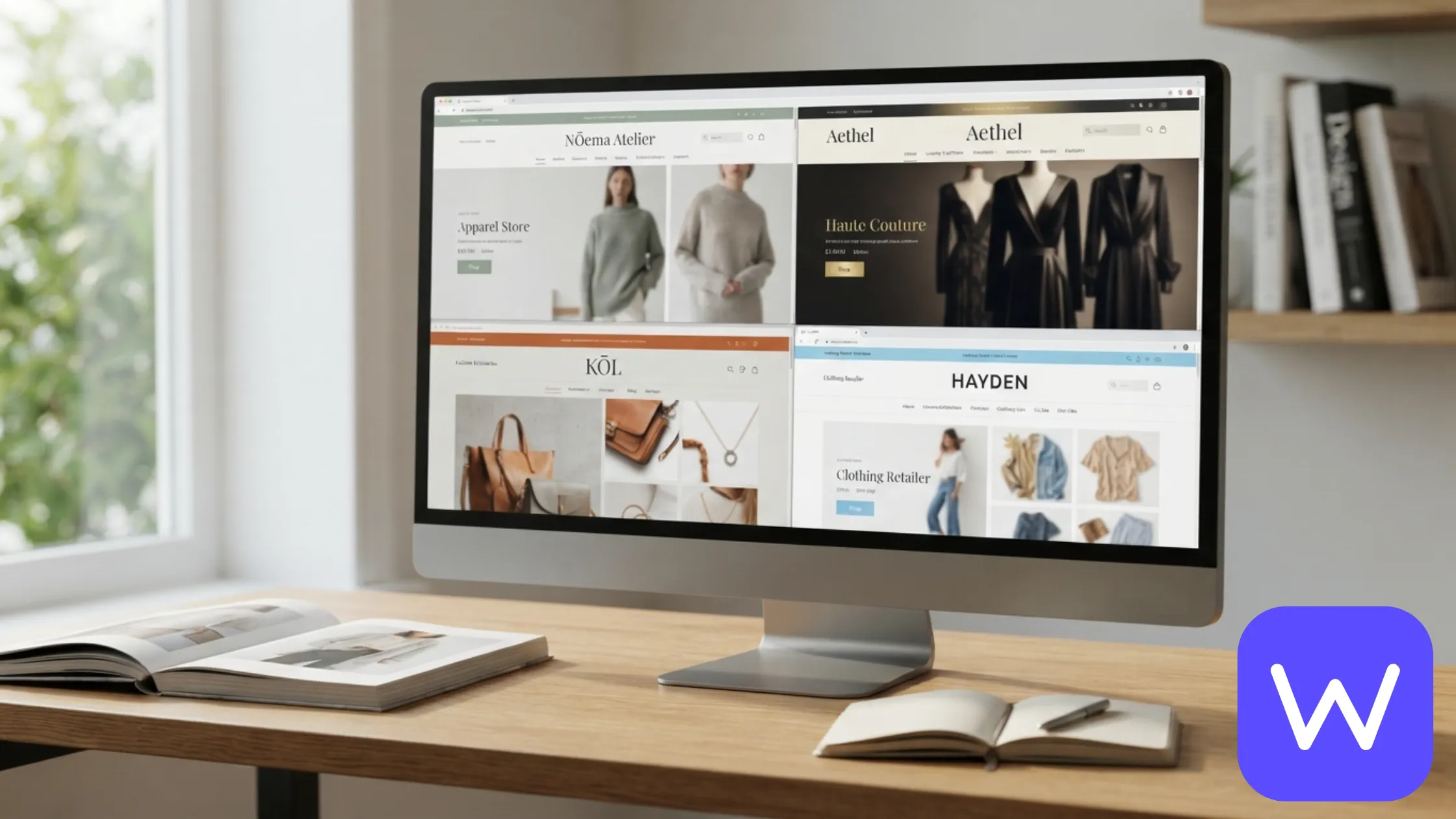
Quick Answer: We have built Shopify fashion stores across apparel, luxury, and custom accessories. This post shows four real projects: Holly’s (fashion apparel), Peremis (fashion retail), Bella Bike Accessories (custom products), and Shop Bella (WooCommerce clothing store). Each one solves a different problem in fashion ecommerce. Here is what we built and why it works.
Fashion ecommerce is one of the most competitive categories on Shopify. Every store is competing for the same customer, and the customer is comparing 5 or 10 stores before they buy. The store that wins is not always the one with the biggest budget. It is the one that looks premium, loads fast, and makes it easy to find and buy.
This post covers four real fashion ecommerce projects we have built on Shopify and WooCommerce. Each one is a different type of fashion store, and each one shows a different design decision. If you are building or rebuilding a fashion store, these examples will show you what works.
If you want the full breakdown of what a Shopify fashion store costs, see our Shopify store design pricing.
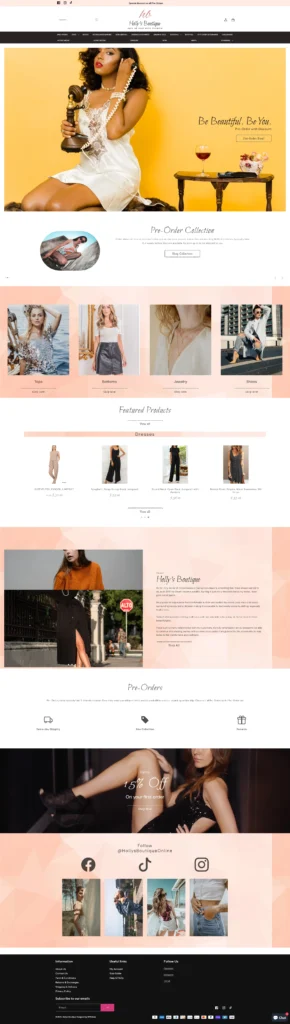
Holly’s — fashion apparel store design
What it is: A fashion apparel brand that needed a website to showcase seasonal collections and make it easy for customers to browse and buy.
Platform: Shopify
The problem: The brand had seasonal collections but no clean way to present them. The old store was functional but did not feel like a fashion brand. Customers could not tell what was new, what was seasonal, or what the brand was about.
What we built:
- A clean Shopify store with product storytelling
- Seasonal collection pages with clear hero imagery
- A streamlined shopping experience from collection to product to checkout
- Consistent product photography across the catalog
Why it works: Fashion apparel is a seasonal business. If the store does not make it easy to see the new collection, the customer scrolls and leaves. Holly’s store now leads with the collection, then moves the customer toward the product page, then to checkout.
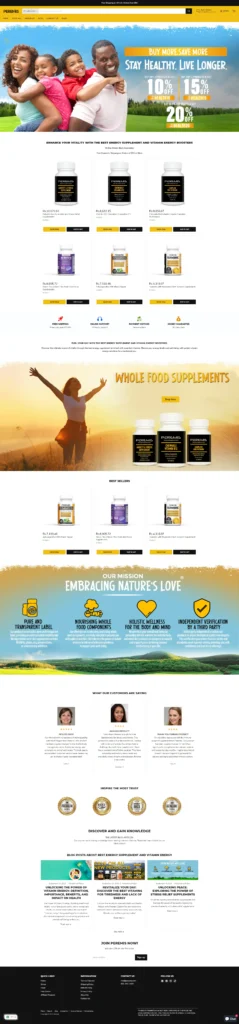
Peremis — fashion retail store design
What it is: A fashion retail store that needed an online presence matching the quality of their in-store experience.
Platform: Shopify
The problem: Peremis had a strong in-store experience. The online store did not match it. Customers who loved the store could not find the same quality of presentation online.
What we built:
- A custom Shopify store with curated collections
- Product browsing organized by style, category, and season
- A clear path to purchase on every page
- A design that matches the in-store experience
Why it works: Retail stores have a physical advantage — customers can see, touch, and feel the products. Online, the store has to recreate that experience through design. Peremis’ store now feels like the same brand online as it does in-store, which is the whole point.
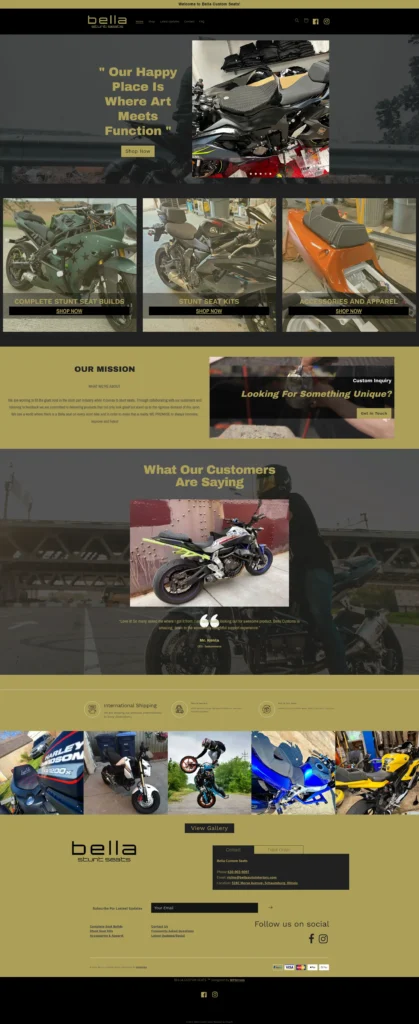
Bella Bike Accessories — custom product store design
What it is: A custom bike accessories brand that needed a website to show off craftsmanship and make ordering custom parts simple.
Platform: Shopify
The problem: Custom products are harder to sell online than standard products. The customer needs to see the craftsmanship, understand the customization options, and trust that the custom order will be delivered correctly. The old store did none of that clearly.
What we built:
- Detailed product pages with craftsmanship photography
- A clear custom order process
- Options for customization built into the product page
- A checkout flow that handles custom orders without confusion
Why it works: Custom products require more trust than standard products. The customer needs to see the detail, understand the process, and feel confident the order will be right. Bella Bike’s store now does all three.
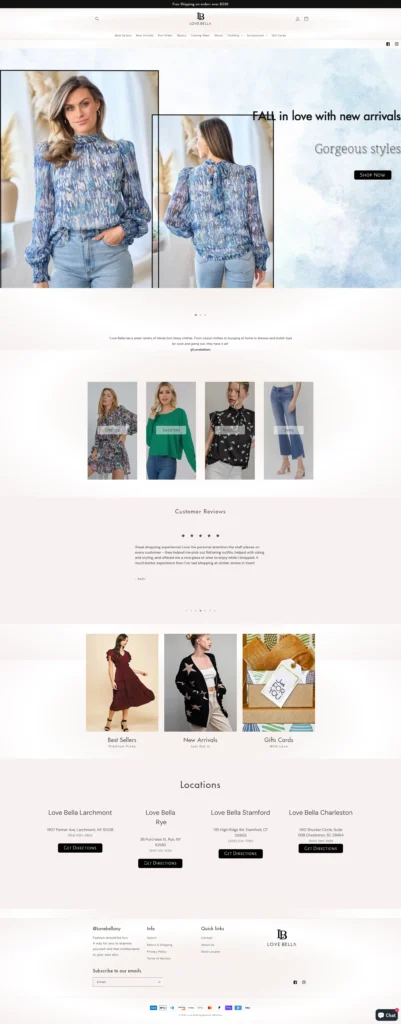
Shop Bella — WooCommerce fashion clothing store
What it is: A fashion clothing brand that needed an online store that made browsing and buying simple.
Platform: WooCommerce (not Shopify — included here as a comparison point)
The problem: Shop Bella had a large product catalog and no clear way to browse it. Categories were messy, filters did not work well, and the checkout was losing customers at the final step.
What we built:
- Clear category navigation
- Product filters built for fashion (size, color, style)
- A checkout flow that minimizes cart abandonment
- A WooCommerce store the brand owns completely
Why it works: For fashion stores with large catalogs, WooCommerce gives you more control over navigation and checkout than Shopify does out of the box. Shop Bella now has a browsing experience that matches the size of the catalog. If you want to see how we compare the two platforms, see our Shopify vs WooCommerce comparison.
What these four stores have in common
Different platforms, different product types, different audiences. Same principles:
1. Product photography is the product
Fashion is a visual purchase. In every one of these stores, the photography was either the biggest asset or the biggest weakness. Consistent, high-quality product photography is not a nice-to-have. It is the difference between a store that feels premium and one that feels like a template.
2. Browsing has to be structured
Fashion customers browse by category, by collection, by style, and by season. If the store cannot handle all four, the customer gets lost and leaves. Every one of these stores is organized for the way fashion shoppers actually shop.
3. The checkout has to be fast
Every one of these stores is optimized for speed and a clear checkout flow. A customer who reaches checkout and gets confused is a customer you lost at the last step. Fast, clean checkouts are what turn browsing into buying.
4. Mobile-first is not optional
Most fashion browsing happens on phones. Every store was designed for mobile first, then scaled up to desktop. A store that works beautifully on desktop but breaks on mobile is a store that loses most of its traffic.
Which platform should your fashion store use?
We build on both Shopify and WooCommerce, and we recommend the right one based on your business, not our preference. Here is the honest breakdown:
| Your situation | Recommended platform |
|---|---|
| You want the fastest path to launch | Shopify |
| You sell physical products and want scaling to be easy | Shopify |
| You want full ownership of the code and data | WooCommerce |
| You have a large catalog and need custom navigation | WooCommerce |
| You want content and commerce to be equally important | WooCommerce |
| You want the simplest subscription setup | Shopify |
For a full comparison, see our Shopify vs WooCommerce breakdown. We will tell you honestly which platform fits your business on the discovery call.
Frequently asked questions
How long does a Shopify fashion store take to build?
Most Shopify fashion stores take 5 to 10 business days from approval for a starter build, and 2 to 3 weeks for a growth build with custom theme work, collection filters, and catalog optimization. Complex builds with large catalogs take 4 to 6 weeks.
How much does a Shopify fashion store cost?
Most Shopify fashion stores start at $2,400 for a Starter Store with up to 25 products, or $4,400 for a Growth Store with a fully custom theme, up to 100 products, and marketing integrations. Custom builds start at $6,000. See the full breakdown on our Shopify store pricing.
Should I use Shopify or WooCommerce for my fashion store?
Shopify is usually the better fit if you want to launch fast and scale easily. WooCommerce is usually the better fit if you want full ownership of the code and data, or if you have a large catalog that needs custom navigation. We will recommend the right one on the discovery call — see our Shopify vs WooCommerce comparison for the full breakdown.
Do you edit product photography?
Yes. Product photography is often the biggest factor in how a fashion store looks and converts. We update, edit for consistency, and optimize product photos as part of every fashion store build.
Can you migrate my existing fashion store to Shopify or WooCommerce?
Yes. We migrate product catalogs, customers, orders, and SEO signals without losing rankings. Migration projects typically start at $1,200 on top of the store build. See our Shopify store services for details.
See what your fashion store could look like
Tell us about your brand and what you want the store to do. We reply within 24 hours with a custom recommendation and a plan for a free demo. No obligation, no pressure.
Prefer to chat first? Message us on WhatsApp and we will reply during business hours.
Related reading: